On 28 June 2026, during the group stage of the Women's T20 World Cup in England, England seamer Kate Cross and former spinner-turned-broadcaster Alex Hartley publicly challenged an ICC playing condition that locked India into the first semi-final if the side qualified. Weeks later, the dispute still frames how fans read tournament design, broadcast calendars and competitive balance.
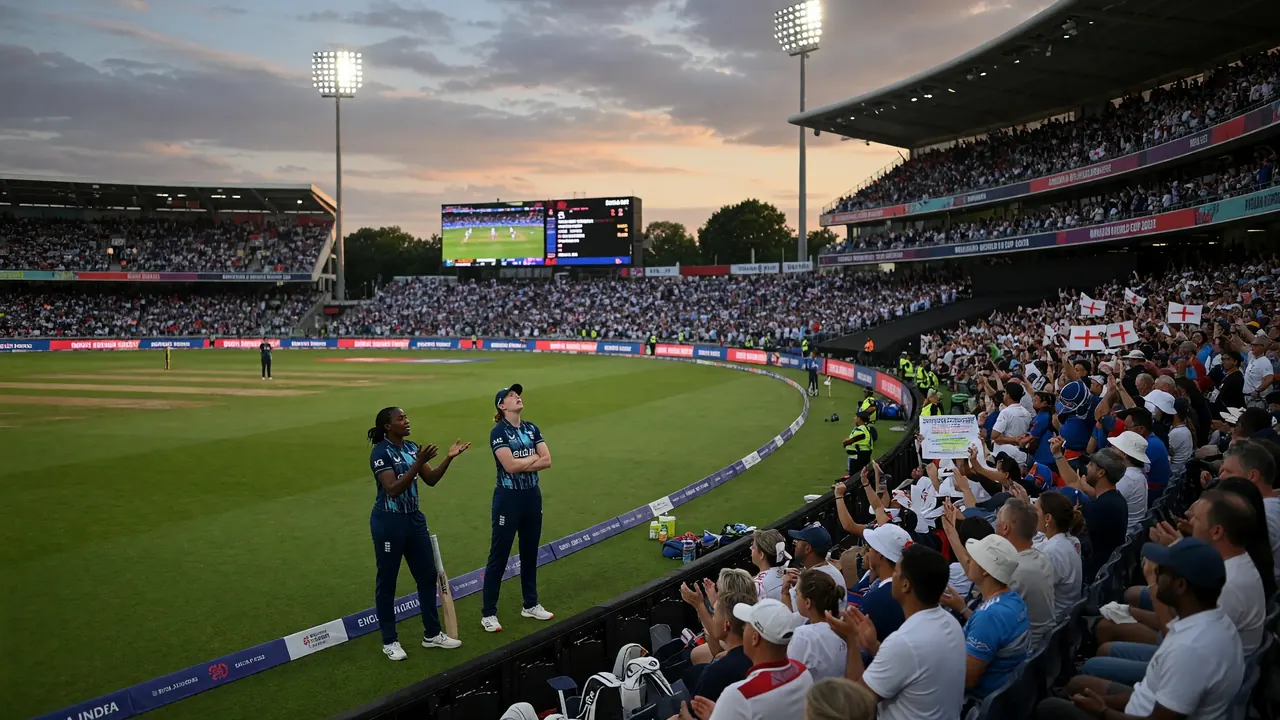
· Retrospective · CricTracker India Desk · Based on reporting first published 28 June 2026
The original reporting, published on Yahoo Sports on 28 June 2026 at 07:04 GMT by Deepanjan Mitra and provided by The Cricket News, captured a public accusation from two English voices at the Women's T20 World Cup. Kate Cross, a current England seamer involved in the tournament, and Alex Hartley, a World Cup-winning former spinner who had moved into broadcasting, argued that the ICC had shaped knockout scheduling around India.
Their complaint did not claim that results were being altered. It focused on a written playing condition that treated India differently from every other qualifier once the last four were known. Cross and Hartley framed the arrangement as unfair even while conceding the commercial logic behind it. The language was blunt: they called the prioritisation "absolutely ridiculous" and asked how a governing body could enter a tournament and elevate one side in that way.
The timing mattered. India sat in Group A alongside Australia and still needed a result from their final group fixture to secure a semi-final place. The knockout calendar, and India's possible path through it, hung over that late group-stage window rather than arriving only after the brackets locked. That is why the remarks read as match-week pressure rather than off-season commentary from outside the bubble.
Looking back from late July, the exchange still rewards a careful reading because so much of modern cricket argument collapses into slogans. This one did not. It named people, a clause number, a date, and a commercial motive. It also drew a bright line between sporting outcomes and administrative design. Weeks later, that line remains the cleanest way to revisit the story without turning it into something the source never said.
At the centre of the argument sat clause 16.10.2 of the Women's World Cup 2026 semi-final and final playing conditions. The default structure was familiar: the side finishing first in Group A would meet the side finishing second in Group B, and the side finishing first in Group B would meet the side finishing second in Group A. On paper, that is the ordinary cross-group knockout template used across white-ball events for years.
A second sentence changed the practical meaning of that bracket. Should India qualify for a semi-final, the clause stated, India would play in the first semi-final on 30 June. If India failed to qualify, the first semi-final on 30 June would revert to the standard pairing of A1 against B2. The fallback mattered. It showed the special treatment was conditional on India's presence in the last four, not a permanent rewrite of every possible bracket path.
That distinction is what Cross and Hartley attacked. Qualification still had to be earned on the field. The advantage, as they described it, was not automatic entry to the last four. It was a guaranteed date and slot once India were through — specifically the Tuesday semi-final that the pair said the ICC regarded as the stronger option for Indian broadcasting windows and time zones.
For anyone trying to explain the rule to a friend, the simplest summary is this: the groups still decide who qualifies; the special sentence decides where India sit on the knockout calendar if they are among those qualifiers. Critics heard a fairness problem in that second decision. Commercial planners heard inventory management. Both readings start from the same paragraph.
India's path into the last four still depended on results. Once that path was secured, the written conditions assigned India the first semi-final on 30 June rather than leaving both knockout dates to open draw or pure group finishing order alone.
| Scenario | First semi-final (30 June) | What the critics focused on |
|---|---|---|
| India qualify | India locked into the first semi-final | Preferred Tuesday broadcast slot fixed in advance |
| India do not qualify | A1 v B2 under the standard pairing | Fallback only if India miss the last four |
| Group structure | A1 v B2 and B1 v A2 as baseline | Baseline remains, but India override applies if they qualify |
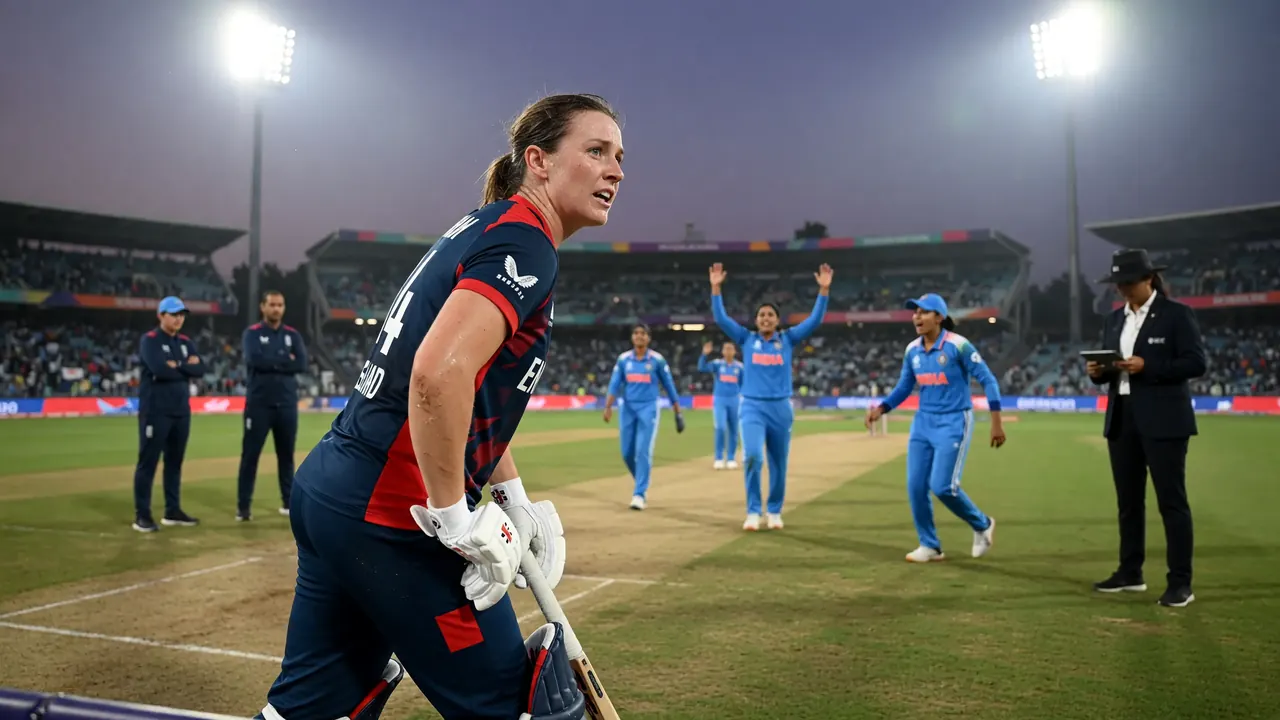
Cross and Hartley did not treat 30 June as a neutral date on a wall calendar. They described the Tuesday semi-final as the preferred commercial window for India from a broadcasting and time-zone perspective. In their telling, the ICC had already decided which knockout night best served the biggest audience and then hard-coded that preference into the playing conditions whenever India were present.
One of the most widely circulated lines from the exchange asked, almost directly, whether the room could talk about the fact that an India semi-final would be guaranteed for the Tuesday slot because the ICC believed that was the best place for the team on the broadcast grid. The wording made the commercial assumption explicit rather than leaving it as an unspoken industry habit.
For Indian fans reading the same clause weeks later, the commercial case is easy to recognise. India generates the largest share of cricket's global viewership and rights value. Marquee windows that land cleanly for Indian living rooms and advertising breaks are a routine part of international scheduling across formats. Prime-time comfort is not a secret advantage invented in 2026; it is the ordinary language of rights tenders, production trucks and advertising rate cards.
Cross and Hartley did not deny that reality. They said they knew exactly why the board behaved that way, because India produces the most viewership and revenue, and still judged the arrangement unfair. That double move — accept the economics, reject the ethics of writing one team into the better night — is what kept the criticism from sounding naive. It also forced anyone defending the clause to answer the fairness question rather than hide behind a claim that critics "do not understand the market."
There is a second, quieter reason the Tuesday assignment stung. In a short knockout window, rest, recovery and travel are not abstract wellness topics. Knowing which night you play can shape preparation even when both sides remain elite. The verified reporting did not invent medical or logistical outcomes from that difference. It did make clear that the calendar itself was the contested resource.
The identities of the two speakers mattered as much as the clause text. Kate Cross was not a retired outsider throwing stones at a tournament she had already left. She was a current England seamer involved in the same World Cup. That proximity made the criticism harder to dismiss as pure punditry. When a player inside the event says the schedule bends toward one side, the conversation moves from fan forums into the competitive environment itself.
Alex Hartley brought a different kind of authority. A World Cup-winning former spinner turned broadcaster, she combined the memory of winning at the highest level with a media platform that could carry the argument beyond the press conference circuit. The pairing therefore mixed insider pressure with public amplification. One voice could be waved away as a frustrated competitor. Two voices, spanning the dressing room and the commentary box, made the story stick.
The original report also placed the remarks inside a broader conversation already circulating on social platforms the same day, including posts that framed the issue as favouritism toward the BCCI's commercial interests. Those posts are useful only as evidence that the debate escaped the English media bubble quickly. They do not, on their own, add new facts about the clause. The durable record remains the playing condition and the pair's quoted critique.
The pair widened the charge beyond one clause at one World Cup. They argued that fixtures across men's cricket, women's cricket and World Cups are repeatedly planned around when India play. In that framing, the Women's T20 World Cup condition was less an isolated novelty and more a written example of a habit the sport already follows in less formal ways.
That claim is harder to measure than the text of 16.10.2, because most broadcast-led scheduling never appears as a single sentence in a playing-condition booklet. Start times shift by an hour. Double-headers rearrange. Neutral venues are chosen with satellite windows in mind. None of those decisions usually name India in bold type. What made this case different was the transparency. A public rule named India and assigned a specific semi-final date once qualification was secured. Critics could point to a paragraph rather than a pattern of anecdote.
Defenders of the commercial approach usually answer with a different comparison set. Major football competitions, tennis majors and other global sports also route peak inventory toward the markets that fund the product. On that view, maximising India's audience helps bankroll the women's game and expand it elsewhere. If the rights money thins, so does the funding available for smaller boards, development pathways and production values. The Yahoo Sports piece recorded that line of defence without presenting an official ICC rebuttal on the fairness question.
Both sides can be partially right at once. Cricket can need India's commercial engine and still owe every qualifier a clean sense that the knockout nights were not pre-allocated by market size. The June row did not resolve that tension. It simply forced the tension into plain English.
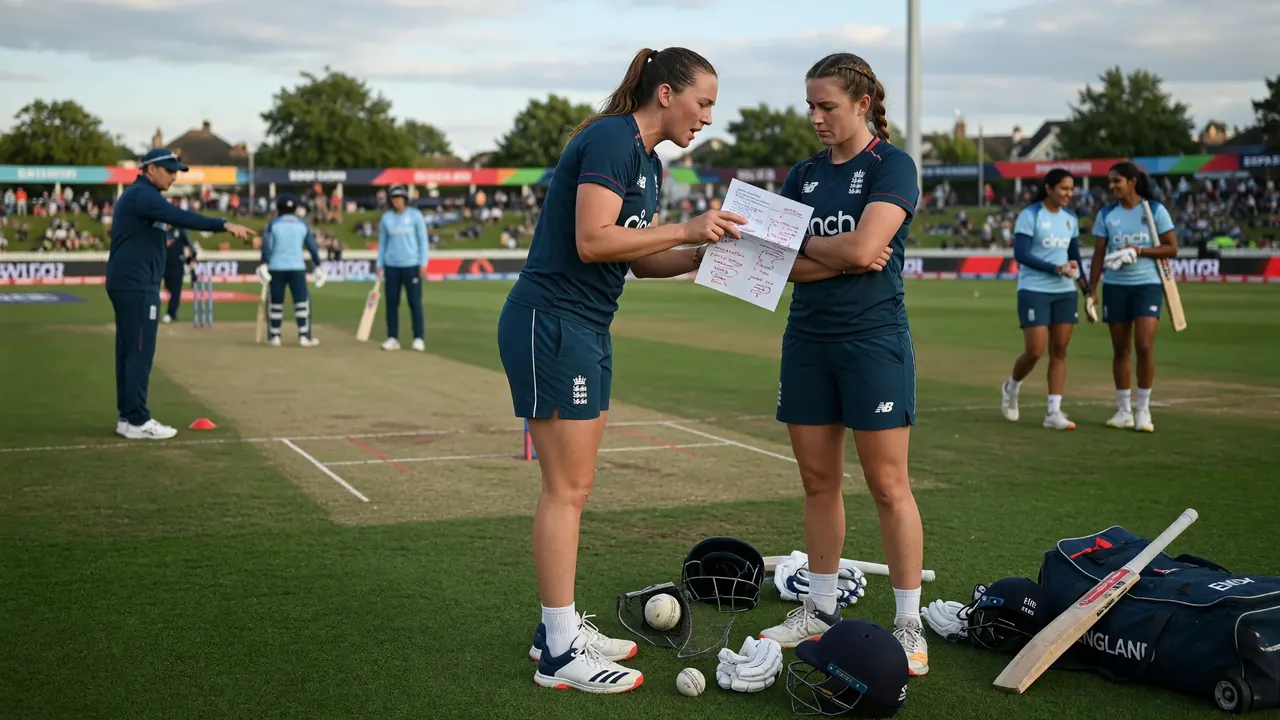
Context from late June helps explain why the comments carried weight inside the event rather than arriving as off-season commentary. The Women's T20 World Cup was being staged in England. Group A paired India with Australia, a draw that left little margin for soft fixtures. India still required a result in their final group match to lock a semi-final berth, so the special India sentence in 16.10.2 was not abstract. It was a live condition hanging over a side fighting to make the clause relevant at all.
That detail cuts both ways in the fairness argument. India still had to qualify. No amount of broadcast preference could invent a last-four place if the group results fell short. At the same time, every other potential qualifier knew that if India got through, one of the two semi-final nights was already spoken for. Rest windows, travel, and the second semi-final's identity would revolve around that fixed point.
There is also a psychological layer that does not require invented quotes. Tournament design shapes how teams budget energy through a group stage. If one night of the knockout phase is already earmarked for the biggest market team whenever that team qualifies, rivals plan around a known constant. Whether that constant is a genuine competitive edge or merely a calendar fact is exactly the disagreement Cross and Hartley pushed into public view.
Cross spoke as a player inside the same tournament. Hartley spoke as a former winner with a broadcaster's platform. Together they combined dressing-room standing with media reach, which is why the remarks travelled quickly through cricket discussion on 28 June rather than remaining a niche rules debate buried in a PDF nobody opens until a rain delay.
Two English voices publicly accused the ICC of favouring India via a written semi-final assignment. The clause text, the Tuesday commercial rationale, the group-stage timing in England, and the pair's acknowledgement of India's revenue weight were all part of the original 28 June record. The ICC was not accused of fixing match outcomes.
Retrospectives often grow a second life of claims the original reporting never supported. This one should not. The verified record does not say the ICC changed umpiring standards, points tables, or playing elevens to help India. It does not invent a secret meeting minute or a private email. It does not convert a scheduling complaint into a verdict on any single match result later in the knockout phase.
Keeping that boundary is part of responsible coverage. Fans are free to dislike the optics of a named-team clause. Analysts are free to argue that commercial design is inevitable. Neither side needs fabricated evidence. The clause text and the public criticism are already enough to sustain a serious conversation about how World Cups should allocate their biggest nights.
The same discipline applies to the commercial defence. Saying that India funds a large share of the global product is not the same as proving that every rival board would collapse without a fixed India semi-final slot. The source acknowledges revenue weight. It does not quantify exact rights splits or prove a unique necessity for the Tuesday assignment over every other design option. Where the evidence stops, the article should stop.
From an Indian desk, the episode sits at the intersection of two truths the domestic audience already understands. First, Indian demand underwrites a large share of the modern international calendar. Evening windows that work in Indian homes are not a minor convenience; they are a core part of how boards, broadcasters and sponsors plan tournament economics. Second, written advantages that name one board invite a fairness debate even when the commercial motive is obvious. Indian fans can hold both ideas at once without apologising for either.
Nothing in the verified record suggests the ICC changed who was allowed to win a match. The controversy was about sequence and spotlight: which night carried the first semi-final, and whether that night should be reserved for India once qualification was secured. For fantasy players and casual viewers alike, the practical consequence was calendar clarity for one side and residual uncertainty for everyone else until India's group fate was known.
There is also a home-audience irony worth stating carefully. Indian supporters often hear that their market "saves" world cricket. That claim can feel like praise until it becomes a reason other teams say the rules were written around them. Pride in commercial weight and discomfort at being the named beneficiary of a special sentence can coexist. The June story made that tension visible without needing insults or conspiracy language.
Looking back from late July 2026, the June remarks remain useful less as a score-settling exercise and more as a reference point for how transparent tournament design has become. When a preference is buried inside rights negotiations, it rarely becomes a player-led story. When it appears as playing condition 16.10.2, it becomes quotable, shareable and hard to dismiss as rumour. Transparency does not automatically equal fairness, but it does make the trade-offs harder to deny.
If the episode has a practical afterlife, it sits with the people who write future playing conditions. Naming one team in a knockout assignment is administratively simple and commercially tidy. It is also politically expensive the moment a high-profile player decides the optics are unacceptable. Designers who want the commercial outcome without the public collision have other tools: balanced start times, rotating host packages, or bracket systems that freeze only after all qualifiers are known and then optimise broadcast windows without pre-printing a favourite nation's name.
None of those alternatives are proven better by the June source alone. They are simply the logical design space opened by the criticism. The point of revisiting the story now is not to announce a new ICC policy. It is to keep the design choices legible so readers can judge the next World Cup booklet with the same sentence-level attention Cross and Hartley forced onto 16.10.2.
For boards outside India, the lesson is double-edged. Complaining about commercial gravity is easy. Offering a funding model that replaces Indian rights value is hard. Any lasting reform has to answer both the fairness complaint and the budget reality. A pure moral win that shrinks the women's game's resources would be a hollow victory; a pure commercial win that normalises named-team privileges will keep producing the same argument every cycle.
The lasting residue of the Cross-Hartley intervention is the clarity of the question they forced into the open. Is it acceptable for a world body to publish a knockout assignment that treats one qualifier differently because of broadcast value? Their answer was no. The commercial counter-answer remains that cricket cannot ignore the market that funds so much of the product, including women's cricket itself.
Those two positions can sit side by side without inventing extra drama. The clause existed. The criticism was public. India still had to qualify through a difficult Group A. The Tuesday slot was described as the preferred Indian window. The pair accepted the revenue reality and rejected the fairness of the fix. Weeks after the original Yahoo Sports report, that factual skeleton is still the cleanest way to remember the row — not as a conspiracy about results, but as a documented argument about how the sport writes its biggest nights.
For readers following later tournament design debates, the June 2026 episode is a concrete case file: named players, a numbered condition, a fixed date, and an explicit commercial rationale. Future calendars will be judged against that level of transparency, whether or not boards ever re-use the same wording. That, more than any recycled outrage cycle, is the present-day relevance of a late-June argument that began with a sentence in the playing conditions and a refusal to pretend the sentence was harmless.
They publicly accused the ICC of unfairly favouring India at the Women's T20 World Cup through a playing condition that guaranteed India the first semi-final on 30 June if the side qualified.
After setting the standard A1 v B2 and B1 v A2 semi-final structure, the clause stated that if India qualified, India would play in the first semi-final on 30 June. If India did not qualify, 30 June would be A1 v B2.
No. India still had to qualify from the group stage. The disputed advantage was the pre-assigned first semi-final slot once qualification was secured.
Cross and Hartley said the Tuesday semi-final was preferred for India from a broadcasting and time-zone perspective, and that the ICC had written that preference into the conditions.
Yahoo Sports published the piece on 28 June 2026 at 07:04 GMT. It was written by Deepanjan Mitra and provided by The Cricket News during the group stage in England.
No. They said they knew the ICC acted this way because India generates the most viewership and revenue, but still considered the prioritisation unfair.
For more match-week notes and tournament analysis from the same desk, visit the CricTracker cricket news archive.
